Friday, May 19, 2006

Collaborative Learning Spaces in England

Collaborative Spaces in Europe
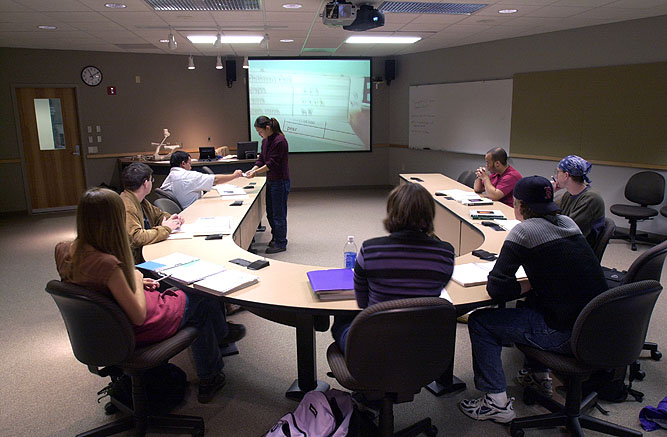
Designing new collaborative learning spaces has become an important discussion in IT and Library circles. This trend is not only occurring in the United States, but also worldwide. The image on the left is from the Metropolitan University in London. This collaborative space is used by college students, but also for special computer workshops for younger adults. These spaces provide an opportunity for learners to work individually, in groups, and also provides the chance to work collaboratively with faculty and instructors. In this example, a group is given a project to solve a problem. The students formulate their own individual solutions, work as a group, and then consult with the teacher. This changes the classroom dynamic from a traditional (more passive) lecture format, to a situation where the learner and teacher are more engaged. Designing collaborative environments requires the designer to think about space, furniture, and room flexibility. AC power is probably more of a concern than network access, as wireless connectivity is becoming more of a standard for technology spaces. Carefully thinking about the space well in advance of any implementation is essential to provide an environment for effective teaching and learning. Look for more discussions on collaborative spaces in upcoming postings.

Wednesday, March 08, 2006

Designing Effective Learning Spaces

When you think about redesigning a classroom, it includes much more than just room height, width, and depth. In addition to the traditional measurements, one has to consider how the room matches the teaching and learning activities for the curriculum. For example, does the teaching activities require an interactive U-shaped table, does the activity require a collaborative environment for flexible work group? All of these issues need to be part of the discussion early on in the planning process. Involving key stake holders is very important. Other key elements to consider are lighting, sound reinforcement and insulation, table and chair ergonomics, line of site and projection screen placement, and technology equipment considerations. All of these elements must be considered in an interactive way. If you change or modify one element, it will likely have an impact on others. The key in this process, is frequent discussions well before the architect begins to draw the first wall boundary on paper. You should decide upon on the building or room philosophy, and then work collaboratively to design the most effective learning space to accentuate student learning or training. The extra up front work will pay huge dividends down the road.


Tuesday, January 24, 2006

Welcome to 2006

Welcome to the new year. As we begin our new spring semester, this blog will begin to devote more time to classroom space design, presentation styles, and how to choose effective and appropriate technology for teaching/learning activities. I encourage you to respond to these posts so you can join in on the discussion forums.

Have a great 2006!


Thursday, December 15, 2005

Happy Holiday Greetings


May your holiday season be filled with the joy, warm, and friendship. Enjoy your special time with family and friends.

Tuesday, November 29, 2005

Wing Technology Center


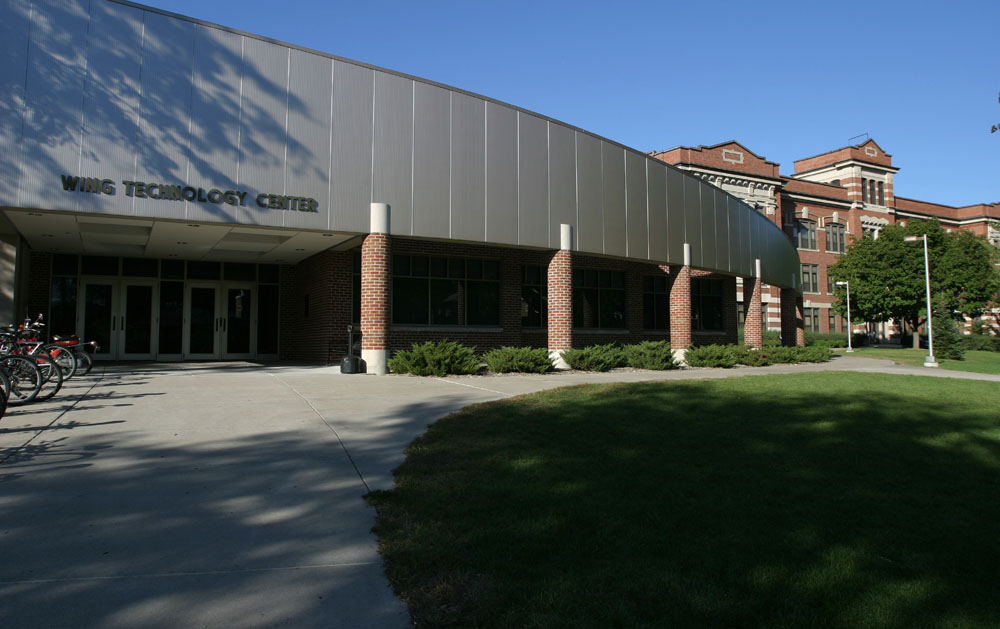
This is the Wing Technology Center where I am located. I had the distinct opportunity to work closely with the architectural firm in designing teaching and learning spaces in this facility. Interestingly enough, the original building was a library built back in 1956, the year I was born. And then, I had a chance to work with a team to create a new technology hub for the campus. The Florence Wing Building was renamed Wing Technology Center in the fall of 2001. For more information on the architectural firm who collaborated on the design and to learn more about the project, go to River Architects at: http://www.river-architects.com/

Monday, November 28, 2005

Learning Spaces With Technology

In some regard, the title of this blog, "Learning Space" has a variety of meanings. This site is meant to provide you with many items to learn and experience. One area I have a specific interest is the design of actual learning environments or, in this case "learning spaces." At the University of Wisconsin-La Crosse, I have had the opportunity to conceive and build a variety of spaces for various teaching and learning activities. If I had a trademark design, it would be my U-shaped interactive space. In this design, the U-shaped table promotes interaction between the participants, and allows for good site lines to a presenter in front of the room. With the appropriate technology and control, ergonomic seating, and room lighting, this can be a very effective teaching and learning area. If you would like to preview some of the many technology classrooms we have on our campus, please feel free to visit:

http://www.uwlax.edu/edtech/de/Classroom_Guide/index.html


Looking particularly at Wing Rooms 104, 126, and 31. In the Health Science Building, look at rooms, 2002 and 2006.

Enjoy.


Sunday, November 27, 2005

Learning Space Maiden Voyage

This is the maiden voyage of my Learning Space Blog. The intent of this site is to offer an environment to post stories, images, sound, and media that help you learn about the world and the people around you. Come on board as you journey with me in the fields of education, learning and technology, digital photography and video, and stories from around the world. I look forward to sharing my world with you.